

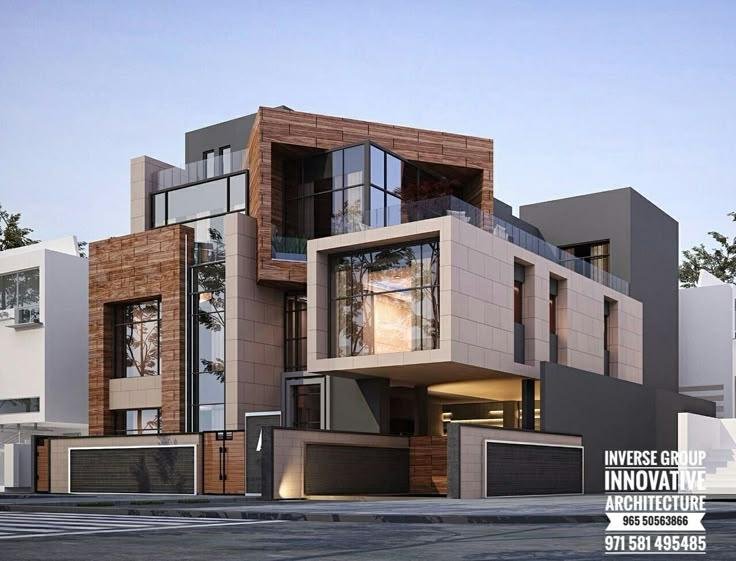
Marble for facades

Marble for Facades: Between Aesthetic Appeal and Realistic Challenges
When considering exterior facade cladding for buildings, marble remains a choice that arouses both admiration and debate simultaneously. Despite its legendary beauty that has adorned the most famous buildings around the world, its use outdoors carries unique challenges that must be well understood before making a decision. This article provides a comprehensive overview of using marble for exterior facades, based on practical experiences and recent scientific studies.
Marble for Facades: A History of Beauty and Challenges
The decades of the twentieth century witnessed widespread use of marble in cladding the exterior facades of the world's most famous buildings, such as the Grande Arche de la Défense in Paris, Finlandia Hall in Helsinki, the National Library of Australia in Canberra, and the Standard Oil Building in Chicago. However, some of these projects faced serious problems with rapid deterioration of marble panels, raising safety concerns.
These experiences created a global impression, perhaps sometimes unfair, that marble is completely unsuitable for exterior use. Some countries even banned its use for facades entirely in the late 1990s.
The Aesthetic Side: Why Do Designers Choose Marble for Facades?
The unique allure that marble adds to buildings cannot be denied:
Natural Luxury: The elegant appearance and unique veins of marble give the building a visual presence unmatched by manufactured materials.
Variety of Options: Marble is available in a wide range of colors (white, beige, grey, black, brown), offering creative freedom to designers.
Property Value: Marble-clad buildings have higher market value and reflect the owner's refined taste.
Challenges and Disadvantages: The Practical Side of Using Marble in Facades
1. Historical and Technical Problems
Studies have shown that some types of marble are more susceptible than others to deterioration when exposed to weather conditions. This problem prompted the European Union to launch a comprehensive research project to develop testing methods that distinguish between marble suitable for exterior use and unsuitable marble.
2. Porosity and Moisture
Marble is a porous natural stone, making it susceptible to absorbing moisture from rain and atmospheric humidity. This property can lead to multiple problems:
Water spots: Hard water may leave white spots on the surface.
Biological growth: Trapped moisture may lead to algae and fungus growth.
Cracking: Expansion and contraction of frozen moisture within stone pores can cause cracks.
3. Heavy Weight
Marble is a heavy material requiring:
Reinforced structural framework: To bear the additional weight.
Specialized anchoring systems: To ensure installation safety and panel stability.
Higher installation costs: Compared to lightweight materials such as composite panels.
4. Continuous Maintenance
Contrary to popular belief, exterior marble is not "install and forget":
Periodic sealing: Needs reapplication of sealers every 1-3 years.
Regular cleaning: To remove dirt and atmospheric pollutants.
Stain treatment: Stains from pollution or acid rain may be permanent if not treated immediately.
5. High Cost
Material cost: High-quality natural marble is expensive.
Installation cost: Requires specialized labor and high skill.
Maintenance cost: Regular maintenance adds ongoing financial burdens.
Technical Solutions to Improve Marble Performance in Facades
With scientific advancement, using marble in facades is no longer impossible but requires precise application of procedures:
1. Pre-Installation Material Testing (EN 16306)
This is the real key to using marble in facades. The European standard EN 16306, resulting from extensive research, allows distinguishing marble suitable for exterior use from unsuitable marble. The idea is simple: test the marble first, then use it.
2. Comprehensive Sealing (Six Sides)
To protect marble from moisture, studies recommend applying sealers to all six sides of the slab:
Top surface: To protect against stains and dirt.
Bottom surface: To prevent moisture absorption from the backing mortar (a primary source of problems).
Four sides: To seal all moisture entry points.
3. Specialized Exterior Sealers
For deep sealing: Choose sealers suitable for exterior use, UV-resistant, and water vapor permeable (to avoid trapping moisture inside the stone).
For hot regions: Water-based sealers can be used for protection lasting up to 10 years.
For additional protection: Some materials may include built-in fungicides (such as Microban®) to resist mold and mildew.
4. Professional Installation
Anchoring system: Use appropriate mechanical anchoring systems rather than relying solely on mortar.
Sealant: Use neutral silicone (such as Silirub MA), which does not cause oil stains on porous stone.
Expansion joints: Leave sufficient joints to accommodate stone expansion with temperature changes.
5. Traceability Guarantee
One of the biggest challenges facing engineers today is ensuring that the marble installed on the building is the same as that tested in the laboratory. The solution lies in implementing strict tracking systems, starting from geological identification of quarry layers, through block tracking, to final slabs.
Comparison: Marble vs. Granite for Facades
| Property | Marble | Granite |
|---|---|---|
| Appearance | Luxurious, elegant, distinctive veins | Bold, speckled, less vein variety |
| Hardness | 3-5 Mohs | 6-7 Mohs (harder and more durable) |
| Porosity | Higher, needs more frequent sealing | Lower, more weather resistant |
| Acid Resistance | Weak (affected by acid rain) | Strong (more resistant) |
| Maintenance | High (periodic sealing and polishing) | Low to medium |
| Cost | Varies by type and quality | Varies, some types less expensive |
| Exterior Use | Requires testing and precise installation | Generally very suitable |