
Traventino Silver Marble

Silver Travertine: Grey Elegance Inspired by Nature
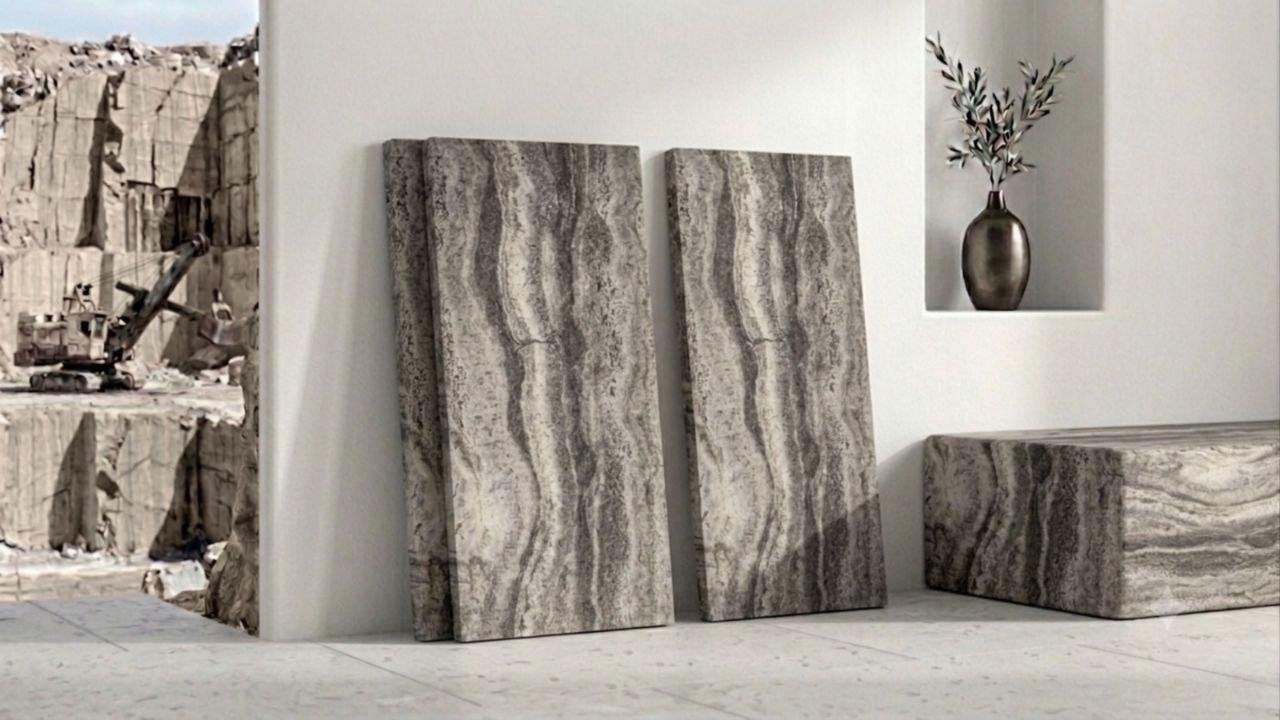
In the world of natural stones, Silver Travertine stands out as one of the finest types of travertine extracted from Turkey. This stone is characterized by its light grey color, sometimes tending towards brown or black, with beautiful natural veins and a unique porous texture that gives it an authentic character. This stone combines the beauty of calm grey color with a light silver sheen, making it an ideal choice for projects seeking contemporary elegance and authentic natural character.
In this comprehensive guide, we will cover everything you need to know about Silver Travertine, from its origin and characteristics, through its multiple uses, to purchasing, installation, and maintenance tips.

What is Silver Travertine?
Silver Travertine is a type of sedimentary limestone, formed over thousands of years by the deposition of calcium carbonate around hot springs and underground rivers. This stone is characterized by its light grey color ranging between cool and soft shades, with hints of brown and black adding depth and unique character.
The Difference Between Travertine and Marble
Many people confuse travertine with marble, but there are fundamental differences:
| Property | Silver Travertine | Regular Marble |
|---|---|---|
| Formation | Sedimentary limestone formed in hot springs | Metamorphic rock from limestone |
| Porosity | High - characterized by natural voids and holes | Low to medium |
| Texture | Natural, irregular, porous | Smooth, crystalline |
| Appearance | Rustic, natural character | Luxurious, classic character |
Commercial Names
Silver Travertine is known in the markets by several names, including:
Travertine Silver (most common name)
Silver Travertine
Turkish Silver Travertine
Turkish Silver Marble
Technical Specifications of Silver Travertine
| Property | Description |
|---|---|
| Stone Type | Travertine - Sedimentary limestone |
| Country of Origin | Turkey (primary source), Italy |
| Primary Color | Light grey, light brown, light black |
| Texture | Porous, natural, irregular |
| Hardness | Medium (softer than granite) |
| Water Absorption | Medium to high (requires good sealing) |
| Heat Resistance | Good |
| Slip Resistance | High (especially with non-polished finish) |
| Available Finishes | Polished, Honed, Tumbled, Leathered, Sandblasted |
| Available Thicknesses | 2 cm, 3 cm |
| Available Sizes | 30×60 cm, 40×80 cm, slabs upon request |
Types and Finishes of Silver Travertine
Available Finishes
Silver Travertine is available in several surface finishes suitable for different uses:
| Finish | Description | Recommended Uses |
|---|---|---|
| Polished | Shiny, reflective surface, pores filled | Interior flooring, countertops, walls |
| Honed | Smooth, matte surface, pores visible or filled | Interior flooring, bathrooms, high-traffic areas |
| Tumbled | Antiqued, irregular surface, rounded edges | Outdoor flooring, walkways, rustic character |
| Leathered | Soft texture with slight sheen | Kitchen countertops, tables |
| Sandblasted | Uniform rough surface | Outdoor walkways, slip-resistant applications |
Cut Types
Crosscut: Cut against the natural layers, giving a wavy vein pattern
Vein Cut: Cut with the layers, giving straight and regular lines
Uses of Silver Travertine
1. Exterior Facades of Villas and Palaces
Silver Travertine is one of the most used types of travertine for exterior facades. The calm grey color gives the building an elegant and modern appearance, with a touch of natural luxury. Despite its relative softness, it remains the first choice for exterior facades in the Kingdom of Saudi Arabia.
2. Interior and Exterior Flooring
Silver Travertine can be used in interior flooring (with polished or honed finish) and exterior flooring (with tumbled or sandblasted finish). It is characterized by good slip resistance, making it safe for walkways and stairs.
3. Luxury Bathrooms
Silver Travertine is especially used in bathroom walls and interior décor. The grey color gives a feeling of purity and tranquility, making it an ideal choice for contemporary-style bathrooms.
4. Interior Décor
Among the most prominent uses of Silver Travertine in interior décor:
TV feature walls
Marble tables
Concrete sinks
Indoor planter boxes
Fireplaces
Indoor fountains
5. Stairs
Silver Travertine can be used in covering stairs, especially with tumbled finish which provides excellent slip resistance.
6. Facade Trim
Silver Travertine is also used as trim in exterior facades, such as window frames, exterior door frames, or elevator facades.
Usage Table by Finish
| Finish | Recommended Uses | Suitability |
|---|---|---|
| Polished | Interior flooring, walls, countertops | Very Good |
| Honed | Interior flooring (high-traffic areas), bathrooms | Excellent |
| Tumbled | Outdoor flooring, walkways, around pools | Excellent |
| Leathered | Kitchen countertops, tables | Good |
Advantages of Silver Travertine
| Advantage | Explanation |
|---|---|
| Elegant and Modern Grey Color | The light grey color gives a feeling of calm and sophistication, suiting all décor styles from classic to contemporary |
| Unique Natural Character | Natural pores and voids give the stone an organic authenticity unmatched by manufactured materials |
| Good Slip Resistance | Tumbled or honed finishes provide a safe walking surface, ideal for wet areas and outdoor walkways |
| Versatility | Can be used in exterior facades, flooring, walls, kitchens, bathrooms, and interior décor |
| Reasonable Price | Considered less expensive than regular marble, making it an economical choice for natural luxury |
| Locally Available in Saudi Arabia | Available in showrooms in Riyadh, Jeddah, and Dammam through reliable suppliers |
| Natural Thermal Insulation | Stays cool in summer, contributing to energy savings in hot climates |
Considerations and Disadvantages of Silver Travertine
| Disadvantage/Consideration | Explanation | Proposed Solution |
|---|---|---|
| High Porosity | Travertine is a highly porous stone, absorbs liquids easily | Apply penetrating sealer during installation, reapply every 1-2 years |
| Softness | Considered relatively soft, may break during installation | Contract with specialized technicians, handle carefully during transport and installation |
| Sensitivity to Acidic Substances | Acidic substances (lemon juice, vinegar, coffee, tea) may cause surface etching and permanent stains | Clean spills immediately, use cutting boards in kitchen |
| Requires Periodic Maintenance | Needs regular resealing to protect the surface | Adhere to regular maintenance schedule (seal every 1-2 years) |
| Susceptibility to Scratching | Softer than granite, may scratch under heavy loads | Use protectors under furniture legs, avoid dragging heavy objects |
| Heavy Weight | Natural stone is heavy | Consult structural engineer before installation |