Riyadh stone yellow carved
Carved Yellow Riyadh Stone: Between the Warmth of Gold and the Artisan's Creativity
In the world of natural stone, where nature's engineering meets human craftsmanship, Carved Yellow Riyadh Stone emerges as one of the finest and most beautiful types of cladding in the Kingdom of Saudi Arabia. This unique stone combines the warm golden color that gives buildings a character of luxury and authenticity, with high carving craftsmanship that transforms ordinary stone into an architectural work of art.
In this comprehensive guide, we will cover everything you need to know about Carved Yellow Riyadh Stone, from its definition and characteristics, through the available types of carving, to its uses and installation and maintenance tips.
What is Carved Yellow Riyadh Stone?
Yellow Riyadh Stone is a natural stone extracted from quarries in the Riyadh region and central areas of the Kingdom of Saudi Arabia. This stone is characterized by its natural golden-yellow color, ranging from light yellow to deep golden, giving it exceptional visual appeal suitable for all types of architectural designs.
Yellow Riyadh Stone formed over millions of years from the accumulation of sandy and mineral deposits in the Najd region, giving it distinctive physical properties that make it resistant to weathering and erosion.
The term "Carved" refers to the process of shaping the stone manually or mechanically to produce various geometric and decorative shapes. Carving differs from other surface finishes because it changes the shape of the stone and not just its texture, giving it a unique artistic and aesthetic dimension.
Geological Classification
According to geological classification, Riyadh Stone is available in three main colors: white, yellow, and cream. White is classified as limestone rock, while yellow and cream are classified as sandstone. This information is important because it indicates that Yellow Riyadh Stone is characterized by a sandy composition that gives it unique properties in carving and shaping.
Available Carving Types for Yellow Riyadh Stone
There are multiple forms of carving that can be applied to Yellow Riyadh Stone, each giving a different appearance:
| Carving Type | Description | Recommended Uses |
|---|---|---|
| Hand Carved (Chiseled) | Executed with side chisel strikes to appear natural and rough | Heritage facades, distinctive interior walls |
| Chiseled Corners | Chamfered edges with specific angles adding depth and movement to the facade | Column cladding, window and door frames |
| Geometric Carving | Regular geometric shapes such as squares and rectangles | Modern facades, architectural walls |
| Engraved Carving | Engraving lines and grooves on the stone surface with various designs | Flooring, walkways, adding visual texture |
| Decorative Carving (Relief) | Shapes raised from the stone surface (sunken or protruding) | Luxury interior walls, murals |
Comparison Between Carving and Other Finishes
To understand the position of carved stone among other Yellow Riyadh Stone finishes:
| Finish | Appearance | Complexity Level | Recommended Uses |
|---|---|---|---|
| Carved (Chiseled) | Natural, rough, handcrafted appearance | High (requires skill) | Heritage facades, luxury interior décor |
| Bush Hammered | Speckled, dotted, uniform | Medium | Outdoor walkways, stairs, high-traffic areas |
| Honed | Smooth, matte | Low | Interior flooring, walls |
| Polished | Shiny, reflective | Medium | Luxury interior décor, countertops |
| Sanded | Smooth, natural | Low | Modern facades, walls |
| Sandblasted | Rough, uniform | Medium | Various outdoor applications |
Technical Specifications of Yellow Riyadh Stone
Yellow Riyadh Stone possesses a set of technical characteristics that make it an excellent choice for construction, especially with the addition of carving that does not negatively affect its durability when executed correctly:
| Property | Value | Notes |
|---|---|---|
| Stone Type | Sandstone | For yellow and cream stone |
| Bulk Density | 2.16 GRS/CMB | Good density providing stability |
| Compressive Strength | 471 kg/cm² | High strength withstands structural loads |
| Bending Strength | 83 kg/cm² | Good resistance to breakage and bending |
| Porosity | 23% | Medium absorption level, requires sealer for protection |
| Abrasion Resistance | 5.16 mm | Good resistance to wear |
| Impact Strength | 23 cm | Withstands shocks well |
| Thermal Insulation | Excellent | Helps save energy and reduce air conditioning costs |
| Acoustic Insulation | Good | Provides a quiet and comfortable environment |
Important Technical Notes
Stone Hardness: On the Mohs scale, yellow sandstone has medium hardness, making it very suitable for carving compared to granite, which is difficult to carve.
Porosity: The 23% porosity means the stone requires good sealing, especially after carving which may increase surface porosity.
Compatibility with Saudi Environment: Yellow Riyadh Stone was designed by nature to suit the Saudi environment, as it efficiently withstands extreme heat, drought, and sandstorms.
Uses of Carved Yellow Riyadh Stone
1. Luxury Exterior Facades
Carved Yellow Riyadh Stone is the ideal choice for cladding the exterior facades of villas, palaces, commercial buildings, and hotels. Carving gives a distinctive artistic character that highlights the building's beauty, and the golden-yellow color gives it a strong visual presence.
2. Palaces and Heritage Projects
It is extensively used in building and decorating palaces and heritage projects, where carving harmonizes with traditional Saudi architectural art. One of the most prominent examples is its use in Diriyah projects.
3. Mosques and Prayer Halls
It is used in building and decorating mosques, especially in mihrabs, minbars, and interior walls, where carving and the golden color create an atmosphere of spirituality and grandeur.
4. Columns and Pillars
Carved stone is an ideal choice for cladding interior and exterior columns, where they can be engraved with geometric or botanical decorations that match the overall character of the building.
5. Interior Feature Walls
In large halls and reception rooms, carved yellow stone is used as a feature wall that adds a sophisticated artistic character. The yellow color creates a warm and comfortable atmosphere.
6. Window and Door Frames
Carved stone is used to make decorative frames around windows and doors, adding an aesthetic touch and enhancing architectural luxury.
7. Restoration Projects
In historical building restoration projects, carved yellow stone is used to preserve the authentic character and revive traditional crafts.
8. Fireplaces and Interior Decorations
It is used in designing fireplaces and interior decorations, adding a warm and luxurious touch.
Usage Table by Carving Type
| Carving Type | Recommended Uses | Suitability |
|---|---|---|
| Hand Carved | Heritage facades, palaces, mosques | Excellent |
| Chiseled Corners | Columns, window frames, building corners | Excellent |
| Geometric | Modern facades, architectural walls | Very Good |
| Decorative (Relief) | Luxury interior walls, murals | Excellent |
| Engraved | Flooring, walkways, interior walls | Good |
Advantages of Carved Yellow Riyadh Stone
| Advantage | Explanation |
|---|---|
| Luxurious and Unique Golden Color | The golden-yellow color adds a touch of luxury and warmth to any architectural design, giving buildings a strong visual presence |
| Unique Artistic Aesthetics | Carving adds an aesthetic and decorative dimension to the stone, transforming ordinary facades into architectural works of art |
| Exceptional Durability and Strength | Possesses compressive strength of 471 kg/cm², ensuring buildings last for decades without need for constant maintenance |
| Excellent Thermal Insulation | Helps keep buildings cool in summer and warm in winter, saving on electricity bills |
| Good Acoustic Insulation | Provides effective sound insulation that improves occupant comfort |
| Weather Resistance | Withstands extreme heat, sandstorms, and harsh weather fluctuations in the Kingdom |
| Authentic Architectural Identity | The stone carries within it the region's heritage and architectural identity, giving buildings an authentic character |
| Added Property Value | Buildings clad in carved natural stone have higher market value |
| Sustainability and Local Availability | A natural local product that helps reduce the carbon footprint of construction projects and supports the local economy |
Considerations and Disadvantages
| Consideration | Explanation | Proposed Solution |
|---|---|---|
| High Porosity (23%) | Yellow sandstone has higher porosity than white stone, meaning it may absorb liquids more easily | Apply high-quality penetrating sealer during installation, renew annually |
| Color Variation Between Batches | The degree of yellow color may vary between different batches from the quarry | Order sufficient quantity from the same batch to cover the entire project |
| Carving Cost | Carving requires skilled labor and special tools, increasing production and installation costs | Contract with experienced specialists, request samples before starting |
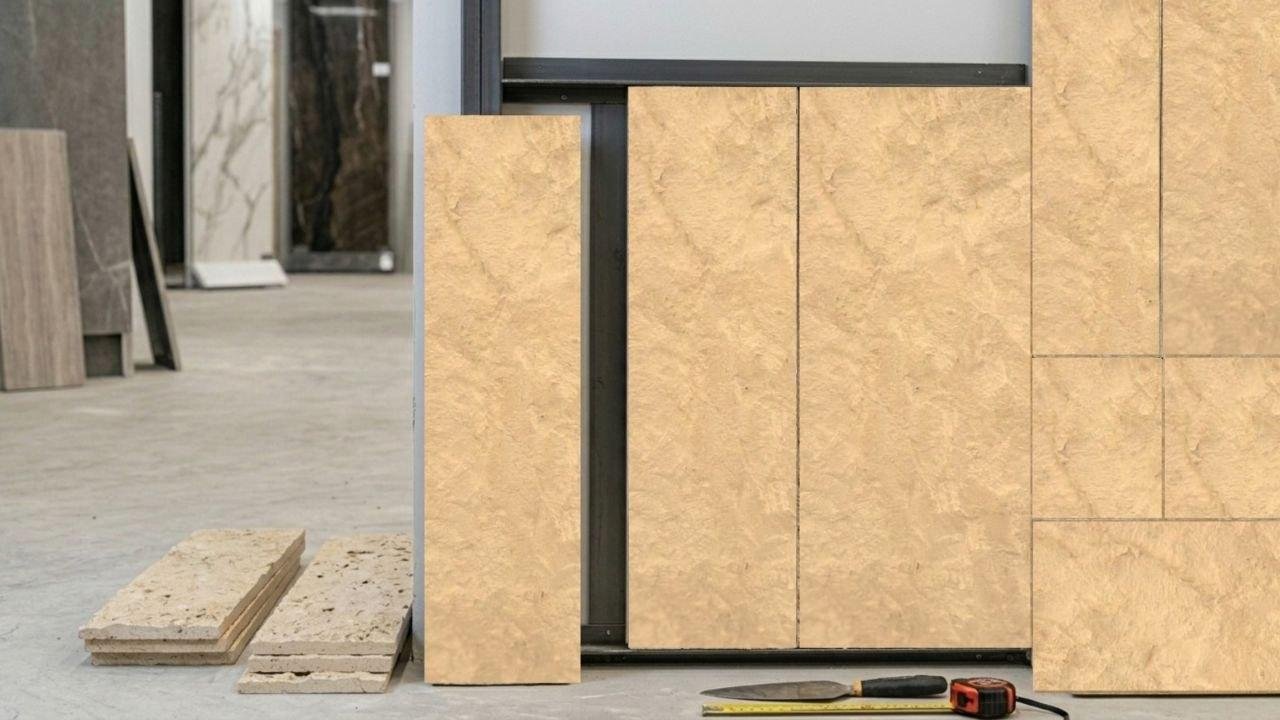
| Longer Installation Time | Carving makes pieces irregular, requiring more time for installation compared to regular stone | Advance planning, contract with specialized contractor |
| Heavy Weight | Natural stone is heavier than manufactured alternatives | Consult a structural engineer to ensure the building can bear the weight |
| Sensitivity to Acids | Limestone and sandstone react with acidic substances | Avoid using acidic cleaners for cleaning |
Tips for Choosing and Installing Carved Yellow Riyadh Stone
Selection Tips:
Inspect Carving Quality: Ensure decorations are clear and regular, and edges are free of fractures or cracks. In hand carving, chisel marks should be clear and consistent.
Color Consistency: Choose color-uniform quantities from the same source to ensure consistency in the project. It is preferable to purchase an additional quantity (5-10%) to account for breakage.
Sample Matching: Request a sample of the desired carving before starting mass production.
Verify Source: Deal with reliable suppliers who provide clear information about the stone's source and quality.
Consult Specialist: For complex decorative carving, it is preferable to consult specialists in heritage or modern design as required.
Installation Tips:
Specialized Contractor: Due to the irregularity of carved pieces, it is preferable to contract with a contractor experienced with this type of stone.
Suitable Mortar Mix: Use a flexible cementitious mix suitable for heavy natural stone. Installation is done either with cementitious mix or by modern mechanical methods.
Precise Alignment: Engravings must be precisely aligned between adjacent pieces to ensure design continuity.
Additional Fixing: Large carved pieces may require additional mechanical fixing (galvanized anchoring screws) due to their weight.
Sealing: Apply a penetrating sealer after installation to protect the stone from moisture and stains.
Joints: Leave appropriate expansion joints (2-3 mm) between pieces to accommodate stone expansion due to temperature changes.
Regular Maintenance Tips:
Gentle Cleaning: Use a soft brush to remove dust from decorations and engraved areas. Avoid using rough brushes that may scratch the stone.
Avoid High Pressure: Do not use high-pressure washers directly on carved stone, as they may damage fine decorations.
Avoid Acidic Substances: Do not use vinegar, lemon, chlorine, or acidic cleaners on the stone.
Treat Stains Immediately: If any liquid seeps into engraved decorations, clean it immediately with a dry cloth.
Re-Sealing: Renew the penetrating sealer every 1-2 years, especially in areas exposed to rain or moisture.
Periodic Inspection: Inspect carved stone periodically to ensure there are no cracks or fragmentation, especially in protruding areas.
News insight
 Mar 03, 2026
Riyadh stone yellow with fennel
Discover the latest insights, trends, and expert analysis in this comprehensive article that covers...