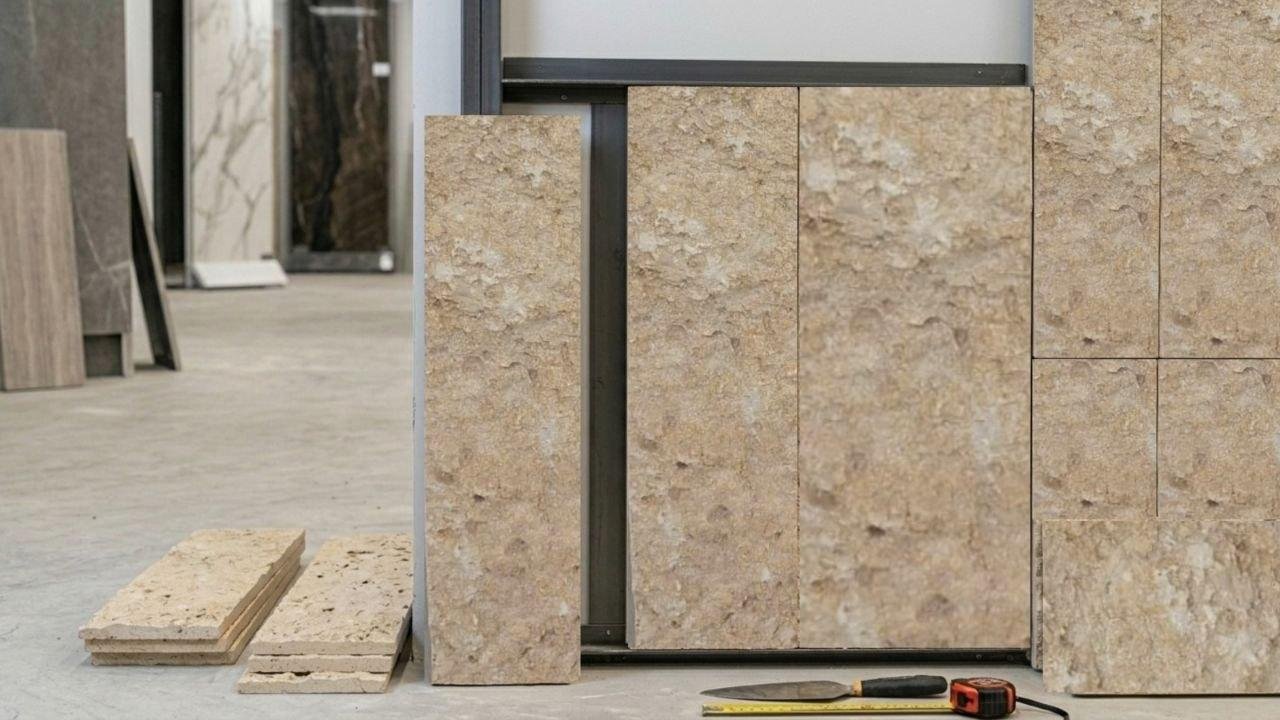
Riyadh white stone mountain face

White Riyadh Stone "Wajh Jabal" (Mountain Face): Natural Beauty Inspired by Earth's Formations
In the world of natural stone, White Riyadh Stone "Wajh Jabal" (Mountain Face) holds a unique position that distinguishes it from other types of cladding. This type of stone carries within it the spirit of Mother Nature, as it is extracted and shaped in a way that mimics the natural appearance of rock formations deep within mountains. This stone combines the purity of luxurious white color with a natural texture that gives buildings an authentic character connected to the surrounding environment.
In this comprehensive guide, we will cover everything you need to know about White Riyadh Stone Wajh Jabal, starting from its definition and characteristics, through its various uses, to installation and maintenance tips.
What is White Riyadh Stone "Wajh Jabal" (Mountain Face)?
White Riyadh Stone is a natural limestone extracted from quarries in the Riyadh region, specifically from the famous Jabal Tuwaiq (Tuwaiq Mountain). Jabal Tuwaiq forms the geological backbone of the Riyadh region, extending for over 800 kilometers, making it the primary source of building stones in the Kingdom for decades.
The term "Wajh Jabal" (Mountain Face) refers to a special surface finish that relies on leaving the outer surface of the stone as it is after extraction from the quarry, with only minor adjustments to highlight its natural aesthetics. This finish creates an appearance that touches the beauty of the mother mountains, where the stone's veins and natural color gradations appear in their authentic, unmanufactured form.
Scientific Name of the Stone
This stone is known internationally by several names:
Jabal Tuwaiq Stone
Riyadh Limestone
Desert Beige Limestone
Geological Composition
Jabal Tuwaiq stone is primarily composed of calcium carbonate accumulated over millions of years. This sedimentary composition gives the stone:
A natural color ranging from pure white to warm desert beige
A texture that sometimes contains fine sand grains, giving it a distinctive desert character
Natural strength and durability making it suitable for various architectural applications
"Wajh Jabal" (Mountain Face) Finish: Characteristics and Advantages
The "Wajh Jabal" finish is one of the natural finishes that preserves the raw appearance of the stone after extraction from the quarry.
Characteristics of the Finish:
| Characteristic | Description |
|---|---|
| Natural Surface | Unpolished, retains the stone's porosity and its original rough texture |
| Color | Shows natural gradations between white, beige, and cream |
| Veins | The natural veins of the stone appear clearly, giving each piece a unique character |
| Available Finishes | Available in several finishes including: Natural Surface, Split, Machine Cut, Chiseled |
Available Surface Types from Jabal Tuwaiq Stone:
Riyadh Stone (Jabal Tuwaiq) is available with several surface finishes depending on the project's needs:
| Finish (English) | Finish (Arabic) | Description |
|---|---|---|
| Natural Surface | وجه طبيعي | The surface as it is immediately after extraction |
| Split Face | وجه مشطر | Rough, irregular surface obtained by splitting the stone |
| Machine Cut | مقطع آلي | Flat surfaces resulting from machine cutting |
| Bush Hammered | بوشمر | Rough, hammered surface |
| Honed | مصنفر | Smooth, matte surface |
| Polished | مصقول | Smooth, shiny surface |
| Sandblasted | مفجر بالرمل | Rough surface resulting from sandblasting the stone |
| Chiseled | مشطوب | Surface with regular longitudinal lines |
Difference Between "Wajh Jabal" and Other Finishes
| Finish | Appearance | Difficulty | Recommended Uses |
|---|---|---|---|
| Wajh Jabal (Natural) | Rough, natural, irregular | High (requires skilled installation) | Heritage walls, fences, projects blending with nature |
| Split Face | Rough, more regular | Medium | Exterior facades, feature walls |
| Chiseled | Regular longitudinal lines | Medium | Modern interior and exterior walls |
| Honed | Smooth, matte | Low | Interior flooring, walls |
| Bush Hammered | Rough, hammered | Medium | Outdoor walkways, stairs, water-contact areas |
Uses of White Riyadh Stone Wajh Jabal
1. Exterior Facades of Heritage and Modern Buildings
The "Wajh Jabal" finish is an ideal choice for projects seeking an authentic natural character. It is widely used in:
Luxury palaces and villas: To add a touch of natural luxury
Government buildings and mosques: To enhance Saudi architectural identity
Tourist resorts: To create visual integration with the surrounding environment
2. Fences and Retaining Walls
Mountain face stone is excellently used in building exterior fences, giving them a fortified and natural appearance. The rough, irregular surface gives a feeling of strength and durability.
3. Interior Feature Walls
In large halls and reception rooms with rustic or heritage design, "Wajh Jabal" stone is used as a feature wall that adds a warm, natural character.
4. Restoration Projects
This finish is extensively used in historical building restoration projects such as:
Al-Turaif District in Diriyah (UNESCO World Heritage Site)
The historic Al-Masmak Palace
Many old palaces and forts in the Najd region
5. Landscaping and Outdoor Spaces
Thanks to its natural appearance, "Wajh Jabal" stone harmonizes perfectly with:
Retaining walls in gardens
Planters and desert plantings
Fountains and water features
Stone pathways in parks and public gardens
6. Decorative Applications
"Wajh Jabal" stone is also used in decorative elements such as:
Columns and pillars
Window and door frames
Outdoor seating areas (stone benches)
Pergolas and annexes