

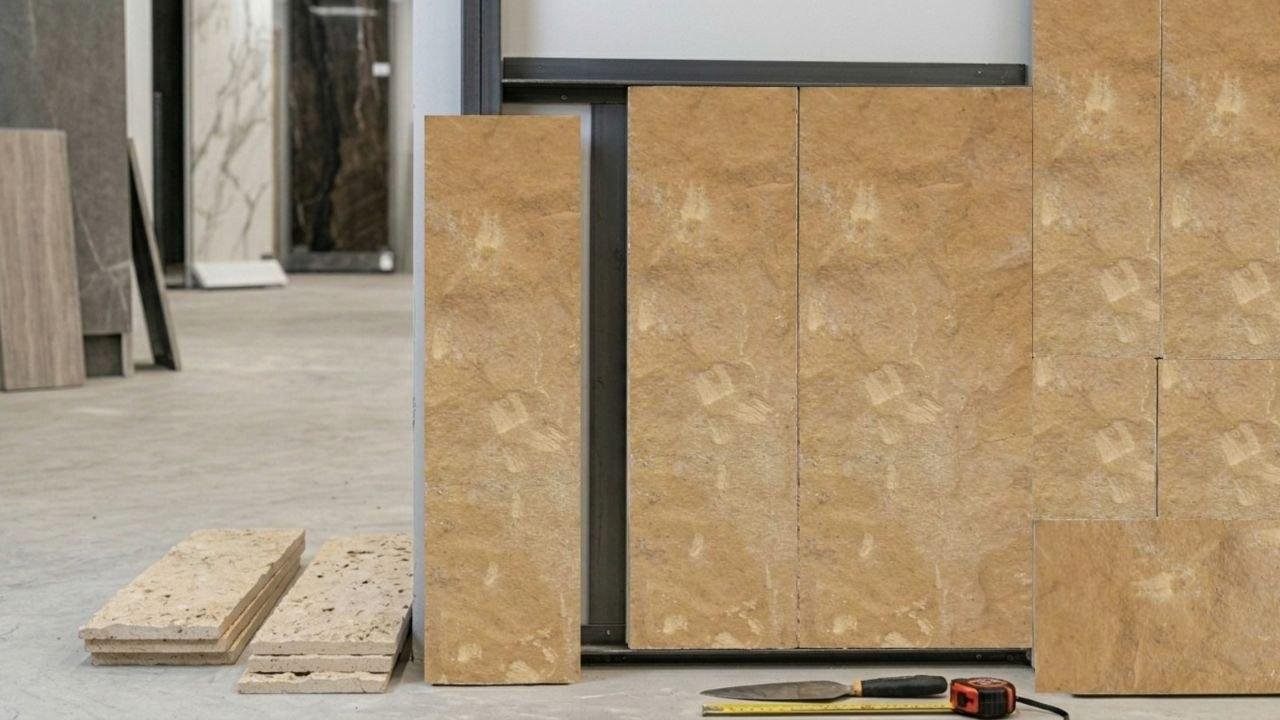
Rock-Face Stone

Rock-Face Stone: Natural Strength and Rugged Elegance for Premium Facades
"Rock-face stone" (characterized by its raw, rustic, and protruding natural surface) is the genuine embodiment of nature's power and authenticity in the modern construction world. Recently in the Kingdom of Saudi Arabia, particularly in the architectural design of villa and palace facades, demand has surged for this type of natural stone. It grants buildings a prestigious, imposing look mimicking steadfast mountains, breaking away from traditional flat walls into the horizons of luxurious, three-dimensional architectural design.
Whether you are looking to impart a rustic character, a developed traditional Najdi style, or even warm "modern" accents, rock-face stone is the ultimate choice to achieve this balance.
What is Rock-Face Stone and How is it Formed?
Rock-face stone consists of blocks of natural stone split and cut from quarries while leaving their exterior face exactly as it is, without smoothing, honing, or polishing. This keeps the surface protruding, rough, and unevenly contoured to reflect the raw texture of the original cliffside.
In some instances, manual or mechanical splitting strikes are applied to the stone to increase its ruggedness, which overlaps in the Saudi market with terms like "engraved stone", "Busharda stone", or carved stone with rustic protruding geometric patterns.
Applications of Rock-Face Stone in Your Villa
The methods of employing this unique stone vary to yield an enchanting visual contrast:
Framing Facades and Corners: It is heavily used on villa corners (Quoins/Columns) or to clad massive structural pillars, projecting a sense of structural durability and strength.
Boundary Walls and Entrances: It is considered the premier choice for cladding villa boundary walls and main entrance gates, where it harmonizes amazingly with wall uplighting.
Interior Accent Walls (Feature Walls): Interior designers have begun introducing it into modern living rooms and men's lounges behind display screens or around fire mantels to break the monotony of flat internal walls.
Types of Rock-Face Stone in the Saudi Market
This bold, rustic texture is available across the most famous stone families in the Kingdom:
Yellow Riyadh Rock-Face Stone (Creamy): The most popular choice for lovers of Saudi heritage identity, featuring magnificent shadow play under sunlight.
White Riyadh Rock-Face Stone: Yields a luxurious modern-rustic look, often merged with large glass facades and black wrought iron.
Rock-Face Marble: Sometimes called "split-face marble strips," used in close-up feature walls and luxurious interior decorations sourced from marble warehouses in Riyadh.
Comparison Table: Rock-Face Stone vs. Smooth (Honed) Stone
To help you coordinate your villa's facade with intelligence, the following table illustrates the difference between both textures:
| Feature | Rock-Face Stone (Rough/Protruding) | Honed Stone (Smooth/Matte) |
|---|---|---|
| Visual Appearance | Three-dimensional; accentuates intense light and shadow play with illumination | Flat, clean surface; yields sharp, minimalist geometric lines |
| Architectural Style | Traditional, Rustic, Classical, or transitional modern accent | Ultra-Modern, Minimalist, and Contemporary |
| Dust Accumulation | Requires extra maintenance as crevices can catch windblown desert dust | Extremely easy to wash and rinse seamlessly |
| Preferred Installation | Strictly mechanical installation (due to its heavy weight and varying thickness) | Mechanical or traditional mortar installation (depending on slab size) |
Essential Supply and Installation Advice
💡 Guidelines from Riyadh Stone Factory Experts:
Mandatory Sealing: Due to its rough surface full of recesses, it absorbs dust and rainwater faster. It must be sprayed with a transparent water-repellent sealer immediately after installation to protect it from discoloration and salt blooming.
Mechanical Installation Only: Rock-face stone is significantly heavier than smooth stone due to its raw thickness. Therefore, it is vital to rely on a skilled natural stone installation contractor in Riyadh to anchor it securely using steel angles and galvanized bolts.
Strategic Placement: Do not clad the entire villa in rock-face stone, so it doesn't look visually heavy or overly dark. Instead, blend 30% of rock-face accents with 70% of smooth white Riyadh stone to achieve a balanced, jaw-dropping design.
Conclusion
Rock-face stone is a celebration of architectural raw power. When applied with balance and engineered with precision, it stands as an unshakeable testament to luxury that elevates your property above the ordinary.