Carved White Riyadh Stone: The Essence of Authentic Saudi Architecture
In the world of natural stone, carved white Riyadh stone holds a special place that sets it apart from other types of cladding. This material combines the purity of luxurious white color with high-quality craftsmanship in carving and shaping, making it a preferred choice for projects seeking a heritage character and authentic Saudi architectural identity.
In this comprehensive guide, we will explore everything you need to know about carved white Riyadh stone, from its definition and characteristics to its various uses, as well as installation and maintenance tips.
What is Carved White Riyadh Stone?
White Riyadh stone is a natural limestone quarried from the Riyadh region, specifically from the famous Tuwaiq Mountain. It is characterized by its brilliant white color, which may sometimes lean toward light beige or cream tones.
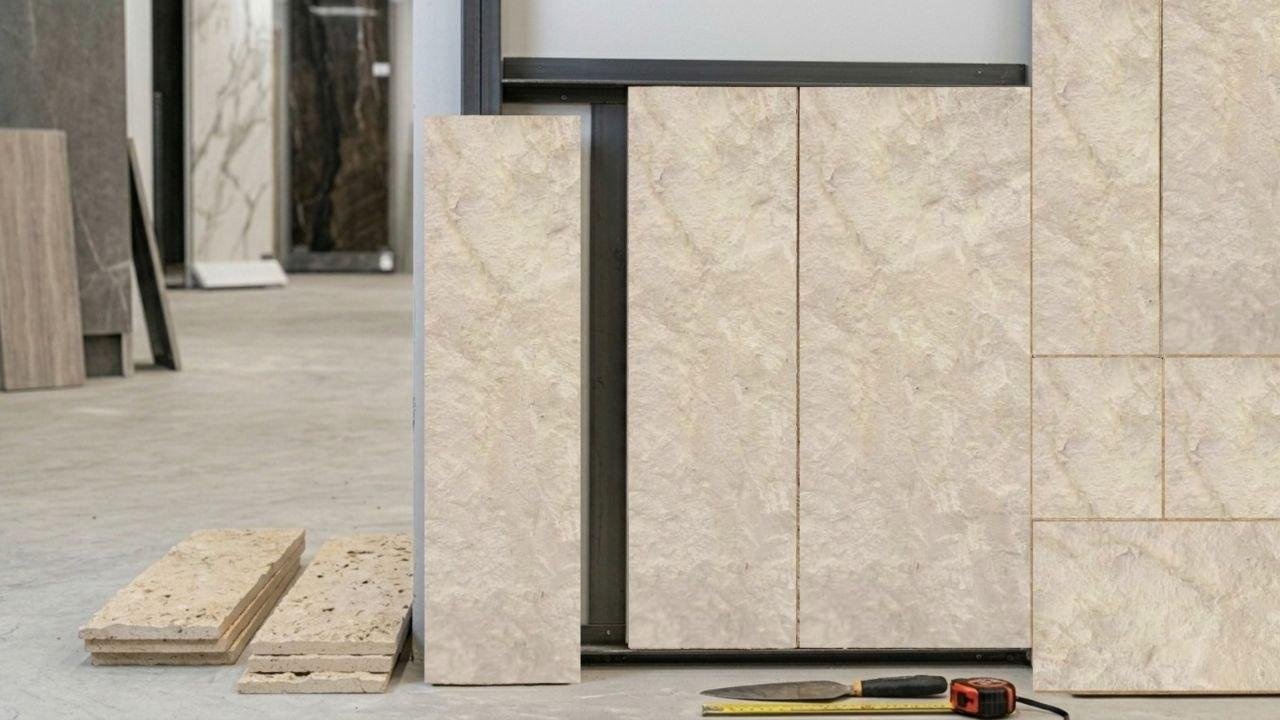
The term "carved" refers to the process of shaping the stone either manually or mechanically to produce various geometric and decorative forms. The carving technique differs from other surface finishes (such as bush-hammered or matte finishes) because it alters the shape of the stone, not just its texture.
Available Carving Types for White Riyadh Stone
Carved Finish vs. Other Finishes
To understand the difference between the carved finish and other common finishes for Riyadh stone:
Uses of Carved White Riyadh Stone
1. Exterior Facades of Heritage and Modern Buildings
Carved white Riyadh stone is widely used in cladding the exterior facades of palaces, villas, government buildings, and mosques. The carving adds a distinctive artistic character that highlights the building's beauty and gives it a unique architectural identity.
2. Columns and Pillars
Carved stone is an ideal choice for cladding interior and exterior columns, allowing for geometric or plant-based engravings that suit the building's overall character.
3. Window and Door Frames
Carved stone is used to create decorative frames around windows and doors, adding an aesthetic touch and enhancing architectural elegance.
4. Interior Feature Walls
In large halls and reception rooms, carved white stone is used as a feature wall that adds a refined artistic touch. The white color makes the space appear more spacious and brighter.
5. Mosques and Prayer Halls
It is extensively used in the construction and decoration of mosques, especially in mihrabs (prayer niches), minbars (pulpits), and interior walls, where the carving harmonizes with traditional Islamic art.
6. Restoration Projects
In restoration projects of historical buildings such as Al-Masmak Fort and Al-Turaif District in Diriyah, carved white stone is used to preserve the authentic character and revive traditional craftsmanship.
7. Fountains and Water Features
Carved stone can be used in designing fountains and water basins, where the engravings and decorations add a unique aesthetic touch to water elements.
Technical Specifications of White Riyadh Stone
White Riyadh stone possesses a set of technical characteristics that make it suitable for carving:
Technical note: The hardness of Riyadh stone (3–4 Mohs) makes it very suitable for carving compared to granite (6–7 Mohs), which is difficult to carve and requires special tools. This explains why our ancestors used this stone for their engravings and decorations.
Advantages of Carved White Riyadh Stone
Tips for Selecting and Installing Carved Stone
Stone Selection:
Check carving quality: Ensure patterns are clear and regular, and edges are free of cracks or fractures
Color consistency: Choose consistent colors from the same source to ensure uniformity in the project
Match the model: Request a sample of the required carving before mass production begins
Consult an artist or engineer: For complex decorative carving, it is preferable to seek heritage design specialists
Installation:
Specialized contractor: Carving requires skilled labor for installation, especially when matching adjacent patterns
Proper mortar: Use a flexible cementitious mix suitable for the stone's weight and shape complexity
Precise alignment: Patterns must be precisely aligned between adjacent pieces to ensure design continuity
Additional fixing: Large carved pieces may need additional mechanical fixing (anchor screws) due to their weight
Sealing: Apply a penetrating sealer after installation to protect the stone from moisture and stains
Regular Maintenance Tips
Gentle cleaning: Use a soft brush to remove dust from carvings and recessed areas. Avoid harsh brushes that may scratch the stone
Avoid high pressure: Do not use high-pressure washers directly on carved stone, as they may damage fine details
Soap and water cleaning: Use warm water with mild soap, and rinse thoroughly
Re-seal: Renew the penetrating sealer every 1–2 years, especially in areas exposed to rain or humidity
Treat stains immediately: If any liquid spills into carved areas, clean it immediately with a dry cloth
Periodic inspection: Regularly inspect carved stone for cracks or spalling, especially in protruding areas
Conclusion
Carved white Riyadh stone is a true embodiment of Saudi architectural identity. It combines the beauty of luxurious white color with high-quality craftsmanship in carving, offering a unique building material that reflects authenticity and heritage. Whether you are planning to build a palace, a mosque, a heritage villa, or even a historical restoration project, this stone gives you the opportunity to create a timeless architectural work of art, in harmony with the local environment and meeting the highest standards of quality and durability.
Let me know if you'd like a different style or a translation into another language.